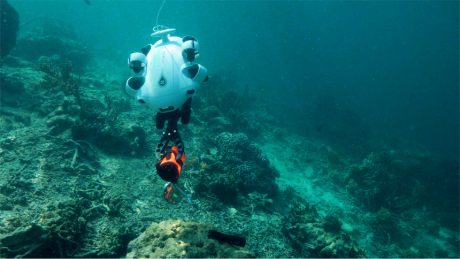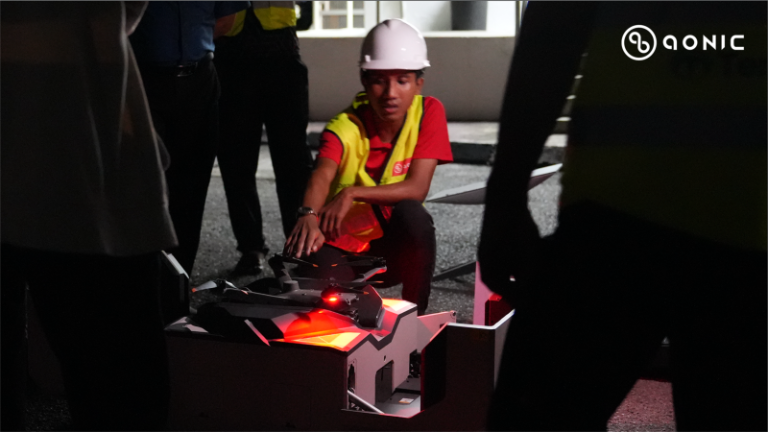
Malaysia sits as the No. 2 producer of palm oil globally and dominates as the largest crop in the agricultural sector in terms of planted area and production value in the country. The staple food of the region, rice and other cash crops remain as important and essential to the domestic food security initiative, providing supply’s support to manufacturing industry as raw materials and export of high-value agro-food commodity.
However, the agricultural sector is always seen as a long cycle production and traditional in farming approaches. This perception has drawn less participation from young generations to replace the ageing farmers and further reliance on foreign labour. Global scale pandemic of Covid-19 has raised the fact of food insecurity due to shortage of labour and agricultural inputs. The crisis of the agriculture industry over the pandemic posted more questions over the resilience of the production, input and supply chain of agricultural sector.
One of the many strategies to address the shortfall is accelerating the modernisation of the industry through mechanised tools and equipment. That is when powering the technology to function on the ground needs some comprehensive help, how about going airborne? It is no longer slow, and skies are no longer the limit. Here comes the agricultural unmanned aircraft or drone!
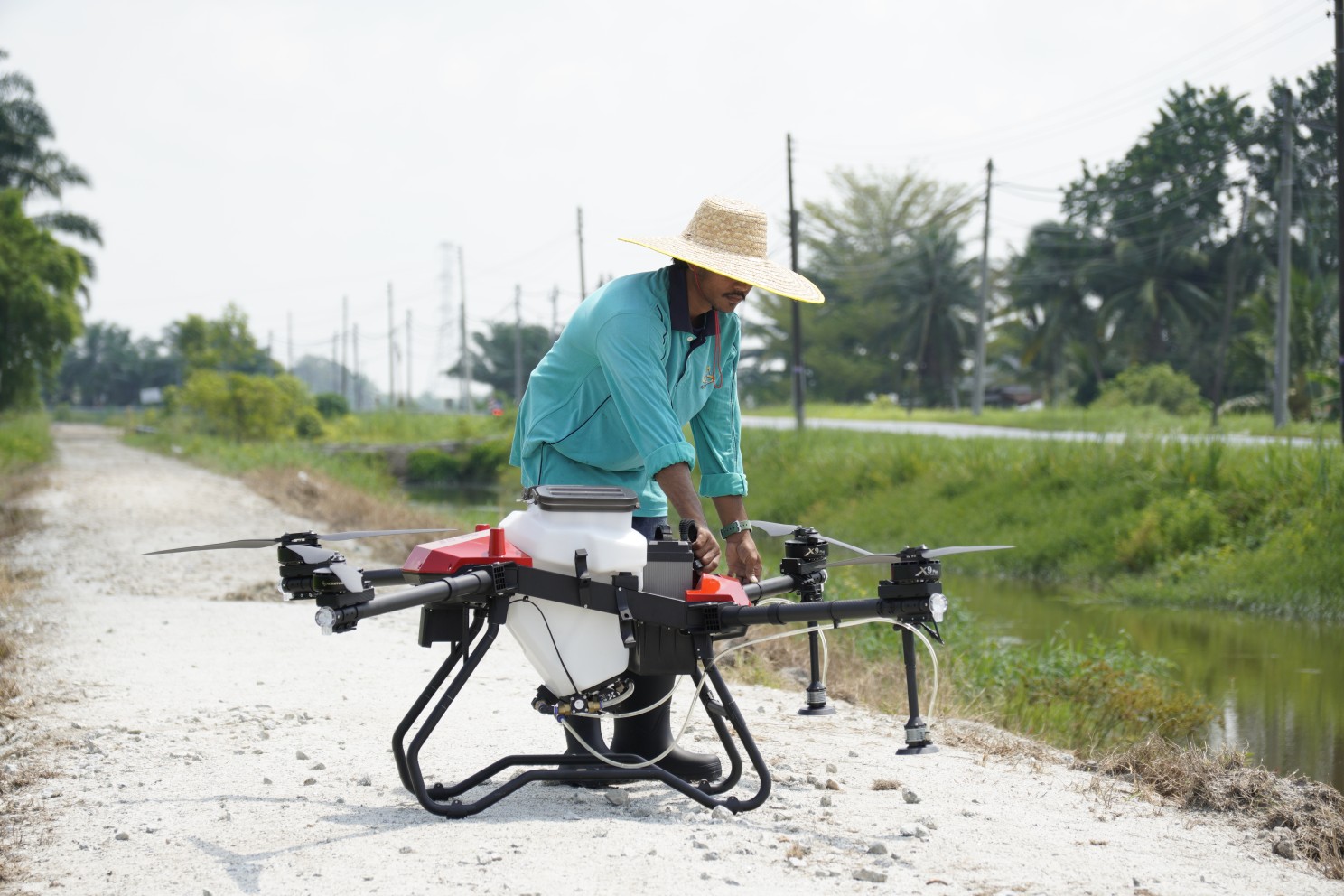
Pest cycles co-exist in all open skies farming as part of the ecosystem. That will be the threat we manage with our agricultural drone.
Our first built Oryctes (our early drone) was used to counter the presence of rhinoceros beetle threat in immature palm oil. This fierce looking beetle loves attacking the young frond on the crown and Oryctes was used to deploy preventive agri-chemical. Now, pests target leaves and multiple points simultaneously. As the palm oil enters its productive stage, rats start feeding on the fresh fruit bunch. If all these threats are not nullified, yield loss is guaranteed.
On the same product platform, the development of the application to address the threat multiplied ever faster from multi-spraying mode to spreading rat bait at pinpoint accuracy. This gives the planter more options of adopting drone technology in pest management with productivity, coverage, efficacy, agri-chemical volume and importantly, data. Data never lies and it is relied on building more credible modeling.
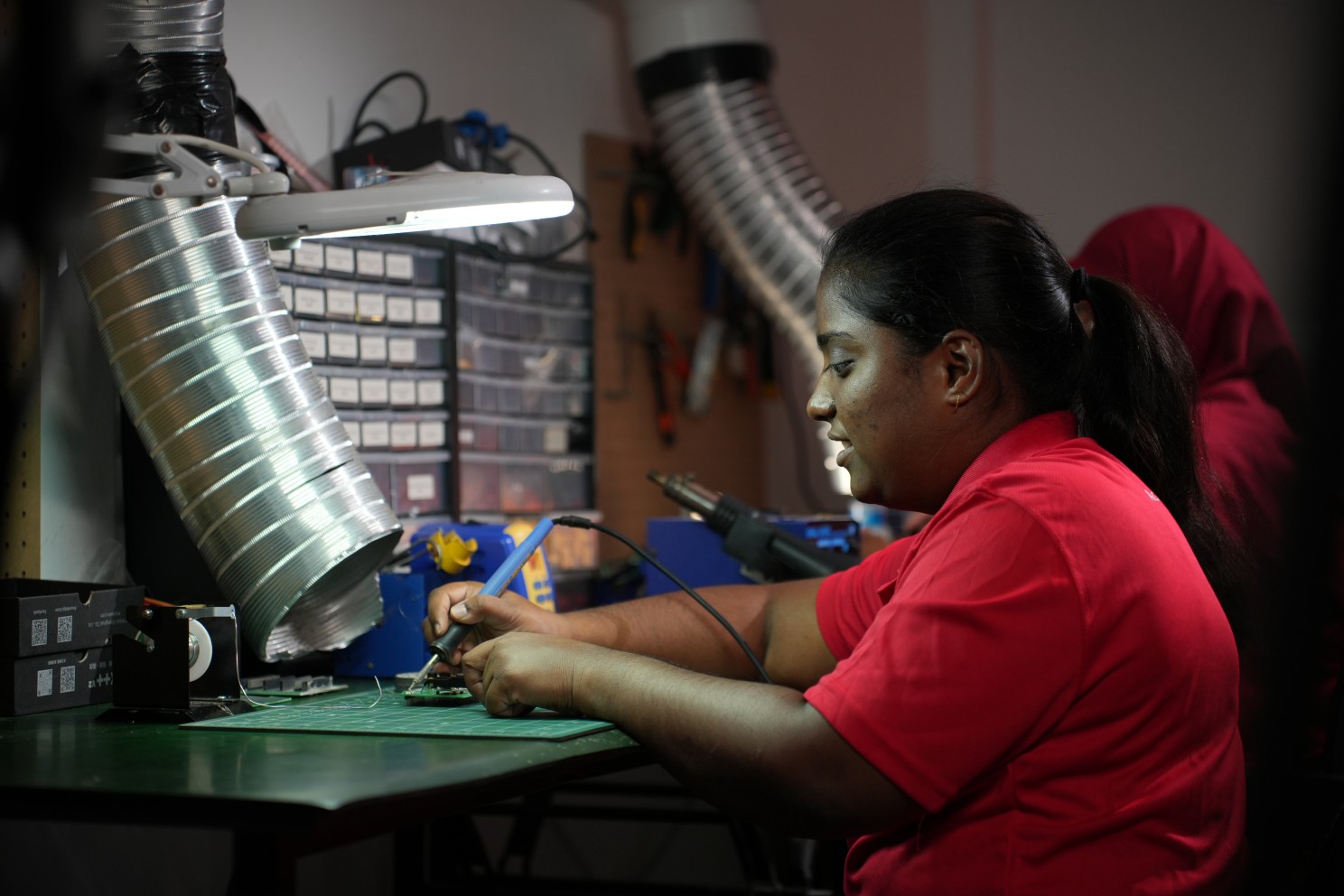
How about using agricultural drones to accelerate the growth rate of palm oil and crops? It needs to evolve faster and contribute significantly to a broader range of crops in the agricultural industry, far beyond palm oil cultivation alone. This is where Aonic collaborates with planters, farmers and agri-chemical suppliers to understand the space and challenges to the deepest possible details. From there, we plan the product development, production, and deployment cycle, happening today for the future.
There will no longer be any potential of rolling back for drone technology in the agriculture industry, but it will be a question of how the product would be able to sustain the rapid changes to the nature such weather that brings more threats to the crop lifecycle, subsequently larger gap towards achieving food security target. Agricultural drones are no longer to be just a box product but must be comprehensive as mechanised total solution for multi-crops spectrum. Mist Drone label series is now capable of blanket and point-to-point mode. Therefore, there is not a single day of static in Aonic, we strive to improve the solution and drone’s operation template to assist our customer in chasing nature.
We work closely with Civil Aviation Authority of Malaysia (CAAM), the guardian of our airspace. Over the years, CAAM has worked tirelessly to enhance the overall UAV framework to ensure a safe operating environment for everyone. Aonic is among the several early drone solution providers and operators in the country. We have seen how the framework developed, evolved and enhanced for betterment in regulation. When people say regulation slows things down, we disagree. It gives us a framework to build confidently. We do have to look over our shoulders when scaling up. We know the structure is there. That’s an edge, skies are the limit but fly responsibly.
We had our share of failed trials. We had designs that did not hold up the way we wanted it to be when under challenging nature and terrain. We have angry customers with proposed workflow that made sense on paper but fell short on deliverables.
But at Aonic, we do not discard those failures. We document them, study the data, and build them from there.
Failure is a lesson to us, and it is not deleted from our journey to play our part in modernising the industry. In agriculture, the stakes are long-term but we are fueled to challenge the norm perspective of the industry.
Agriculture is not slow, and it is moving faster than in the past decades. We accelerate the future, today.